How to Travel by Train in Italy: A First-Timer’s Guide
Taking the train in Italy gets easier once you know what to look for. At Roma Termini, your train to Florence might be listed under a city farther up the line. A ticket for Venice can take you to the historic city or leave you on the mainland. Whether you need to stamp a ticket depends on the operator and the type of ticket you bought.
Start with three things: the exact station, the train operator, and the instructions on your ticket. This guide walks you through a first journey from Rome to Florence, then shows what changes when you’re going to Venice or taking a local train to Pompeii.
Which Train Should You Take in Italy?
Train | When to use it | What to know before buying |
|---|---|---|
High-speed trains | Journeys between major cities such as Rome, Florence, Venice, Milan, and Naples | Compare Trenitalia’s Frecciarossa and Italo where both serve the route. Your booking is for a specific train and includes a seat. |
Intercity trains | Longer journeys where the high-speed route is unavailable, less convenient, or more expensive | Check the journey time and stops. A direct Intercity can be simpler than a faster route with a change. |
Regional trains | Shorter trips, day trips, and connections to smaller towns | Seats are generally unassigned. Read the ticket instructions to see whether it needs validation and what to do if you change trains. |
Local services run by another operator | Trips such as Naples to the Pompeii archaeological site on the Circumvesuviana | Use the local operator’s timetable and ticket rules. The station name and entrance can differ from the ones you used for the long-distance train. |
For a first trip, compare the whole journey from hotel to hotel. A direct train into the city center can save more time than a faster departure that leaves you with another connection. Italy’s official transport guide · Italo ticket information
How to Book an Italian Train Ticket
- Search for the exact stations. Start with the station closest to where you’re staying, then check whether it’s served by the train you want. Many cities have more than one station, and searching by city name alone can bring up several.
- Compare direct trains first. If you’re traveling with luggage or taking your first train in Italy, a direct service can be worth a slightly higher fare. If you do need to change, check whether it’s the same station and how much time the connection gives you.
- Read the fare rules. Before choosing the cheapest ticket, check whether you can change the departure or get a refund. If you’re choosing a train after an international flight, allow for immigration, baggage collection, and the trip from the airport to the station.
- Save the ticket somewhere you can find it. Keep the booking email and make sure you can open the ticket on your phone. If your operator provides a PDF, save a copy. For an app-based ticket, check what you’ll need to show before you leave your hotel.
Book ahead for high-speed trips if the departure time matters or you want a chance at a lower fare. For a short regional outing, buying closer to departure can give you more flexibility. Check the timetable first, especially for your return. A day trip feels quite different when you discover the next train is much later than you expected.
Do You Need to Validate Your Train Ticket?
Check the operator and ticket type before boarding. A paper regional ticket and a digital high-speed reservation have different rules.
If you have | What to do |
|---|---|
A reserved Frecciarossa or Italo ticket | Take the train shown on your booking and use your assigned seat. Have the ticket ready for inspection. |
A Trenitalia Digital Regional Ticket | You no longer need to check in manually. The ticket validates automatically at the selected train’s scheduled departure. If your plans change, open the booking and check your change options before that departure. |
A standard Trenitalia paper regional ticket that requires validation | Stamp it at a station validation machine before boarding. If you’re unsure or the machine won’t work, ask station staff or speak to the conductor promptly. |
An EAV or other local operator’s ticket | Follow the instructions from that operator. A gate, machine, or app may be part of the process. |
Trenitalia Digital Regional Ticket instructions · Italo boarding information trenitalia.com
Your First Intercity Train: Rome to Florence
For a city-center journey, start by searching Roma Termini → Firenze Santa Maria Novella. Florence’s central station is often shortened to Firenze S.M.N. on signs or booking screens. Some services use other stations, so check both ends before buying. Trenitalia
At Roma Termini, look for the Partenze board. Match the train number on your ticket. The board may show the train’s final destination, so the city listed in large letters might be beyond Florence. Look for binario, which means platform. If the platform hasn’t appeared yet, stay where you can see the board and check it again before heading down.
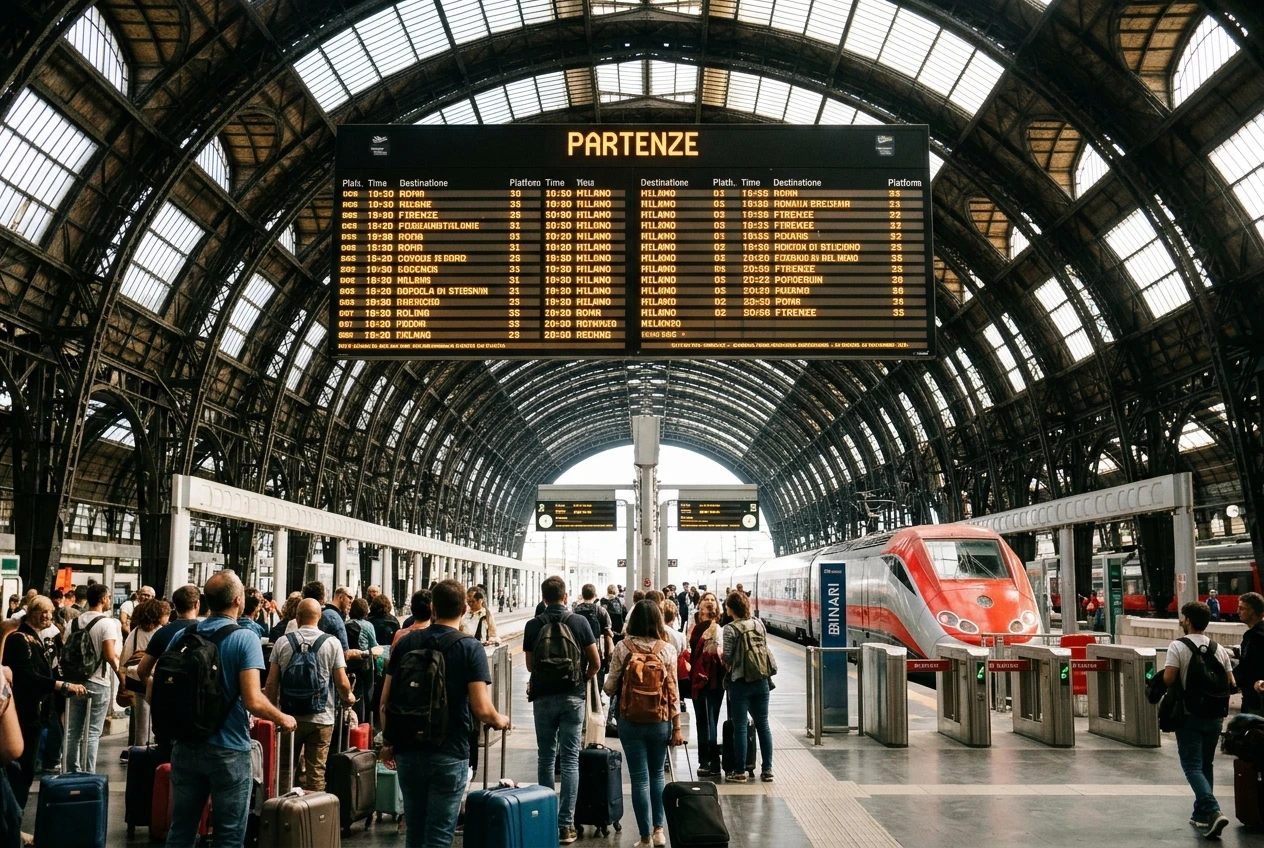
On the board or ticket | What it means |
|---|---|
Partenze | Departures |
Arrivi | Arrivals |
Binario | Platform or track |
Carrozza | Carriage or coach |
Posto | Seat |
Ritardo | Delay |
Cancellato | Cancelled |
On the platform, look for the carriage number near the doors. Boarding near your own seat is easier than moving through several carriages with a suitcase. Put larger bags in the designated luggage racks and keep valuables and anything you’ll need during the trip with you. If you’re bringing a large suitcase, check the operator’s rules for your fare or travel class before leaving for the station. Italo luggage and travel FAQs
Give yourself time to find the platform at a large station, especially if you need a lift or have luggage. As a planning buffer, 20 to 30 minutes is a reasonable starting point at an unfamiliar station. Allow more if you still need to buy a ticket, find assistance, or work out where to go.
Florence to Venice: Choose the Right Arrival Station
Search Firenze Santa Maria Novella → Venezia Santa Lucia if you’re staying in historic Venice. Venezia Mestre is on the mainland and makes sense if your hotel is there or you’re connecting onward. Check the station printed on your booking before you pay. Italy’s guide to getting around

Once you arrive at Santa Lucia, your next leg may be on foot or by vaporetto, Venice’s public water bus. Look up the route to your accommodation before traveling. A short walk on a map can include several bridges with steps. If you have luggage or prefer fewer stairs, ask your hotel which arrival route it recommends. Venice sightseeing guide
Naples to Pompeii: Check Which Station Serves the Ruins
If you’re taking the EAV Circumvesuviana to the archaeological site, look for Pompei Scavi–Villa dei Misteri on the Naples–Sorrento line. In Naples, check departures from Porta Nolana or Garibaldi. If you arrive on a high-speed train at Napoli Centrale, follow the signs to the local Garibaldi station and allow time to find the EAV platforms.
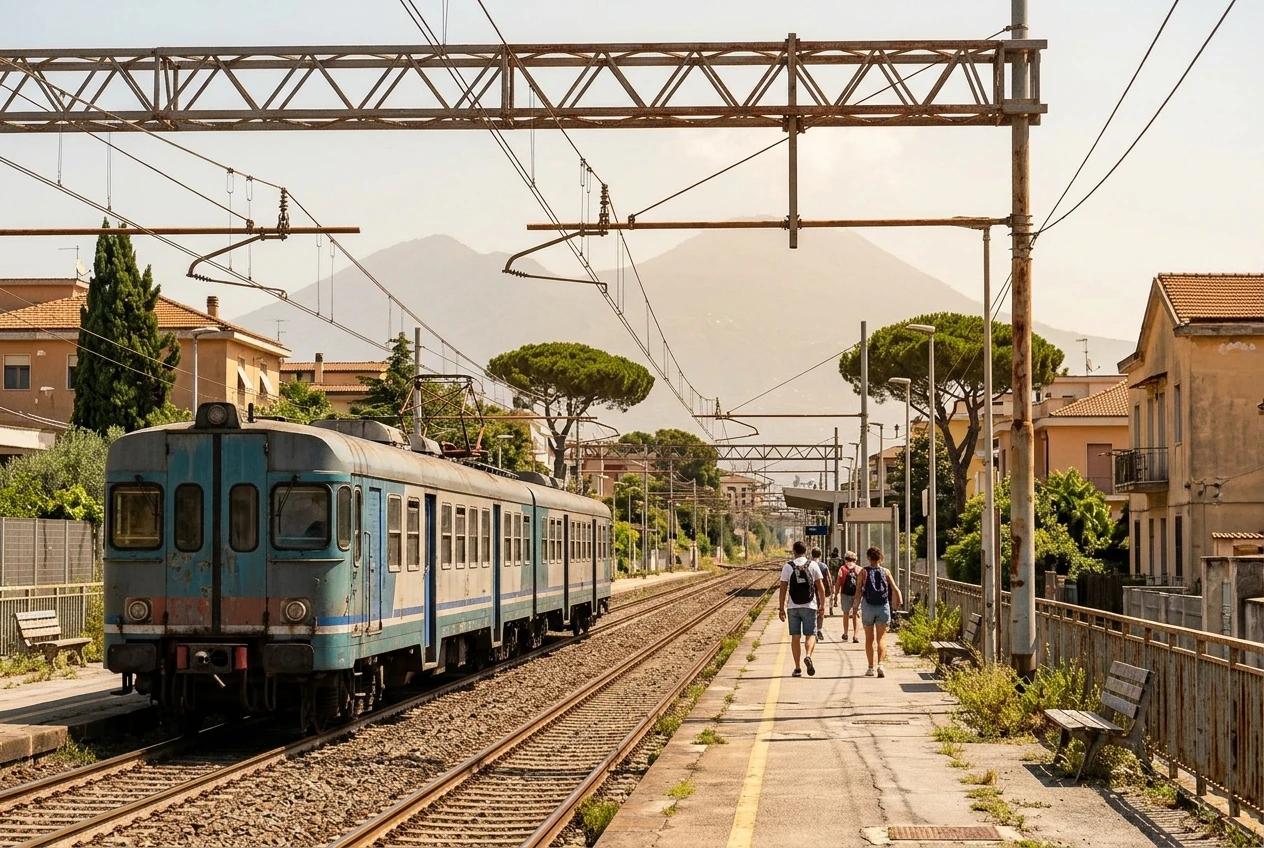
A train listed simply for Pompei can take you to a different station. Check the full station name against the entrance you plan to use. Some older guides also recommend the Campania Express. EAV currently lists that service as suspended until further notice, so check what’s actually running on your travel date. EAV local rail information · Campania Express service notice. Pompeii travel guide
What If Your Train Is Delayed or You Miss a Connection?
Check the departure board and the operator’s app first. If a delay puts your connection at risk, speak to the conductor before you get off or ask at the operator’s service desk when you arrive. Show the whole booking and ask which train you should take next before buying a replacement ticket or boarding another reserved service.
A through-ticket can protect you if a delay causes you to miss a connection covered by that ticket. Separately purchased journeys may be treated differently, even if they appear together in your itinerary. If you’re buying separate tickets, especially across operators, give yourself a longer buffer. For the last connection of the day, check what your fallback would be. Trenitalia travel assistance and rights
Keep your booking confirmations and any delay or cancellation notices until the trip is settled. If the operator proposes a different route, check where it leaves you and whether you still have time for the next leg.
Traveling With Luggage or Getting Step-Free Assistance
For a connection, look beyond the number of minutes on the booking screen. You may need to walk the length of the platform, use an underpass, wait for a lift, and find a different carriage on the next train. Choose a longer connection if you’re carrying a bulky suitcase, traveling with children, or need extra time to move comfortably.
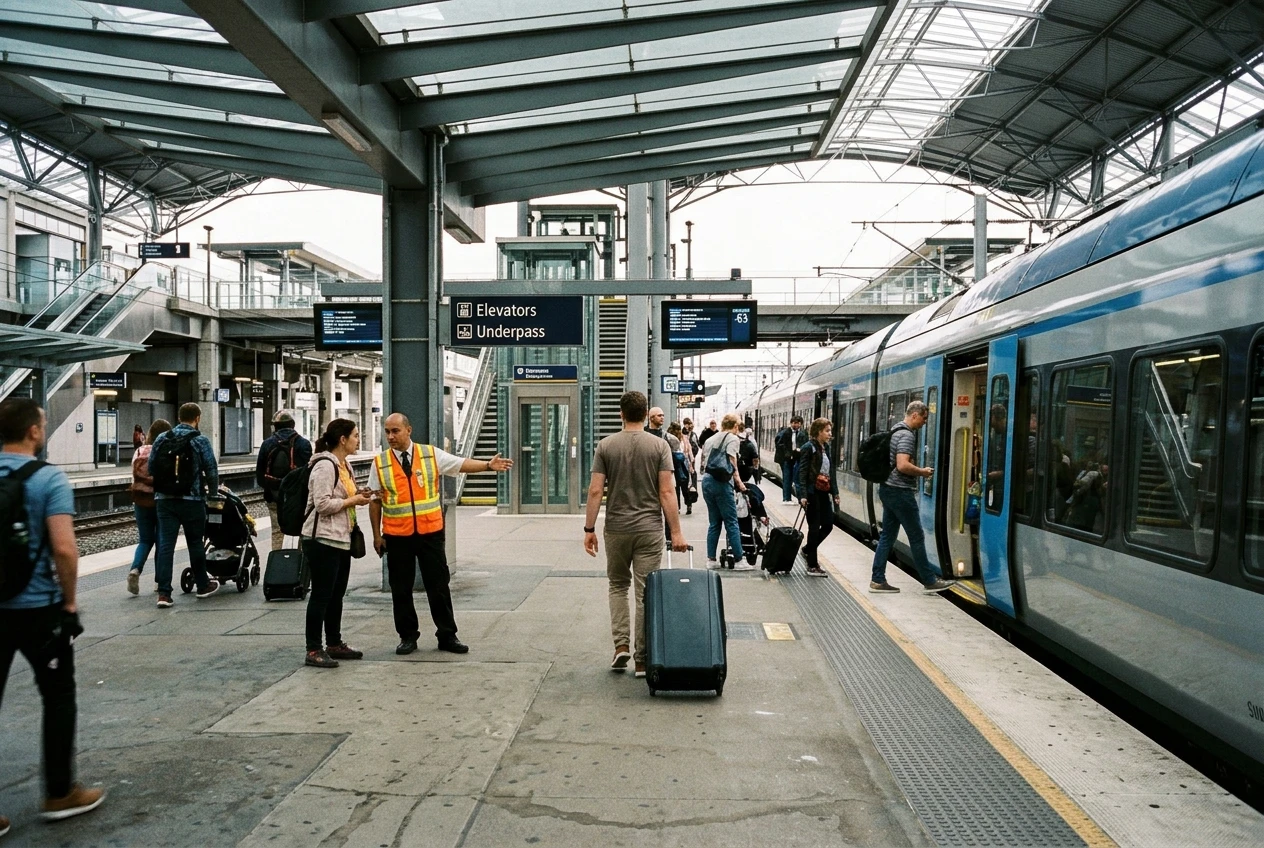
If you need boarding or transfer assistance, check RFI’s Sala Blu network before you book. Confirm that assistance is available at your departure, connection, and arrival stations, and check the notice required for your journey. For a local operator such as EAV, check its arrangements separately. RFI passenger assistance
A Quick Check Before Boarding
- Station: Is this the exact departure station on your ticket?
- Train: Does the train number match the departure board?
- Ticket: Is it ready to show, and have you validated it if required?
- Carriage: Do you know your coach and seat, if assigned?
- Arrival: Do you know how you’ll get from the station to your accommodation?
If you’re still choosing your stops, start with the Italy overview for first-time visitors. For an example of how the train journeys fit into a longer trip, see the 14-day Italy itinerary.